
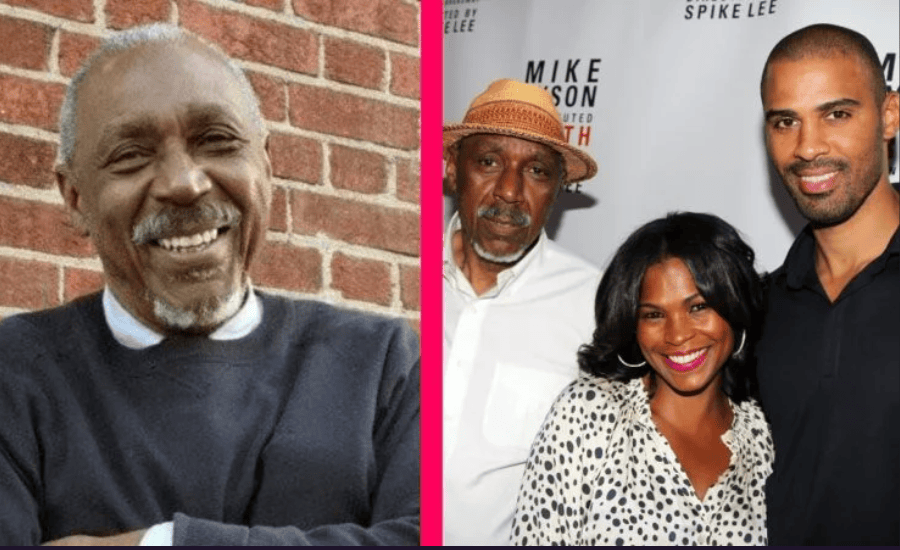

Doughtry Long Jr., often known as “Doc” Long, was an American poet, educator, author, and community activist born on March 14, 1942, in Atlanta, Georgia, and raised in Trenton, New Jersey. He dedicated more than 30 years to teaching literature and creative writing at Trenton Central High School and became widely respected for his commitment to education and social change. Long also served as a Peace Corps community development specialist in West Africa and established an African American studies program at Trenton State Prison. His most notable works include Black Love, Black Hope, Song for Nia, Timbuktu Blues, and Rules for Cool.
Beyond his literary achievements, Doughtry Long was known as the father of actress Nia Long and comedian Sommore. Throughout his life, he received numerous honors, including the Broadside Press Award, a fellowship from the New Jersey State Council on the Arts, and the Governor’s Award for Excellence in Teaching. Remembered for his wisdom, creativity, and dedication to uplifting others, Long left behind a lasting legacy in poetry, education, and community service before passing away on January 27, 2020, at the age of 77.
Quick Bio
| Full Name | Doughtry Long Jr. |
| Nickname | “Doc” |
| Born | March 14, 1942 — Atlanta, Georgia |
| Raised In | Trenton, New Jersey |
| Education | West Virginia State College (undergrad); Master’s in Urban Studies, The College of New Jersey |
| Profession | Educator, Poet, Community Activist, Author |
| School | Trenton Central High School (30+ years teaching literature & creative writing) |
| Honor | Poet Laureate of Trenton, NJ; Broadside Press Award; NJ State Council on the Arts Fellowship; Governor’s Award for Excellence in Teaching |
| Published Works | Black Love, Black Hope (1971); Song for Nia; Timbuktu Blues; Rules for Cool; Zoom Sway; Book of Numbers (children’s) |
| Literary Journals | The Literary Review, Brilliant Corners, Obsidian, Painted Bride Quarterly, Black Renaissance Noir |
| Social Service | Peace Corps, West Africa (community development specialist) |
| Prison Outreach | Organized the African American Studies Program at Trenton State Prison |
| Family | Married Talita Long (née Gillman); children: Nia Long (actress), Lori aka Sommore (comedian), Djamila McRae |
| Personal Passions | Jazz, photography, fishing, travel, good food |
| Passed Away | January 27, 2020, aged 77 — Trenton, New Jersey |
Read more: Yvonne Crittenden
A Twin Born Into Fire and Verse
Picture Atlanta, Georgia, in 1942. The South was still drawing hard lines between people, and the world was already at war. Into that particular storm, Doughtry Long arrived as a twin, no less carrying the double weight of his birth city’s contradictions. He wouldn’t stay there long. Like many Black families at the time, his family traveled north, arriving in Trenton, New Jersey, where the ethnic diversity blended with the industrial bustle of mid-century America. of a migrant community still finding its shape.
Trenton wasn’t glamorous. It wasn’t a city that made headlines for the right reasons. But for Doughtry Long, it became something more important than famous; it became formative. The city’s texture, its working-class grit, its Black neighborhood rhythms, would eventually pulse through every line of poetry he ever wrote. You don’t read Doc Long and think “textbook.” You read him and think “lived.”
Did you know Doughtry Long resigned from a prestigious position as associate dean of students at the University of Pennsylvania in 1970 as an act of protest against policies he believed were unjust. He walked away from institutional power and chose principle instead.
The Scholar Who Chose the Streets
After Trenton Central High School, Long headed to West Virginia State College a historically Black institution that shaped his intellectual appetite and political conscience in ways a predominantly white university never could have. He later returned north for a master’s in urban studies at The College of New Jersey, an academic choice that said everything about where his priorities lay: not in literary theory for its own sake, but in understanding cities, communities, and the human beings compressed inside them.
The Peace Corps Chapter In a chapter of his life that most people never hear about, Doughtry Long carried his community ethos all the way to West Africa, working with the Peace Corps as a community development specialist and recruiting from HBCUs to bring more young Black Americans into that service.
The classroom at Trenton Central High School is where he planted himself for over three decades. Literature, creative writing, and the architecture of a good sentence were his tools. But his students were his true work. Doc Long didn’t just teach English; he handed young people a language to describe their own lives. In a city that often felt ignored by the broader world, that was an act of radical generosity.
And he didn’t clock out at 3 p.m. After school hours, Long made his way to Trenton State Prison, where he built the African American Studies Program from scratch. The image of him walking those corridors with books and belief, treating incarcerated people as students rather than inmates, that’s not a small thing. That’s a life’s philosophy in motion.
The Poet Behind “Black Love, Black Hope”
By 1971, Doughtry Long had published what would become his most recognized work. The title alone, “Black Love, Black Hope,” was a statement in the cultural moment of early 1970s America, a direct response to the fire and fracture of the civil rights decade. This was not poetry for academia’s dusty shelves. It was poetry written in the voice of a man who had marched alongside ideas, argued in faculty meetings, and walked through a world that sometimes refused to see him fully.”He was Larenz Tate in Love Jones but older.”— Nia Long, reflecting on her father after his death, 2020
His published catalog expanded steadily: “Song for Nia” (written, tellingly, for the daughter who would one day carry his name into global fame), “Timbuktu Blues,” “Rules for Cool,” “Zoom Sway,” and a children’s book called “Book of Numbers,” dedicated to his grandchildren. His work appeared in journals that actually mattered in literary circles: “Brilliant Corners,” “Obsidian,” “The Literary Review’s” 50th Anniversary Edition, and anthologies like “The Poetry of Black America.” He won the Broadside Press Award. He received a fellowship from the New Jersey State Council on the Arts. The Governor’s Award for Excellence in Teaching arrived on top of that recognition that he excelled not just as an artist but as a human being in service to others. Did you know When Doc Long gave poetry readings at a Trenton bookstore, he didn’t come alone; he brought his jazz band. The music and the words arrived together, the way he believed they always should.
The Complicated Family Story
Here is where the story gets textured where the legend softens at the edges and becomes something more honest. Doughtry Long married Talita Long, a teacher and printmaker of Trinidadian descent. They had daughters: Nia, Lori (who the comedy world knows as Sommore), and Djamila. The marriage didn’t last. When Nia was still young, Talita moved the family first to Iowa City, then to South Los Angeles while Doc remained in Trenton.
Distance shaped that relationship. Nia Long has spoken publicly about the emotional complexity of growing up with a father far away, about the years it took to understand him, about the week she spent in Trenton after his death, walking his streets, meeting his people, finally seeing the full scale of the life he had built without her watching. “He was a legend here,” she said of his community impact. That realization arriving after loss is one of the most human stories in this entire biography.
Nia described the arc of their relationship as a journey from absence toward forgiveness and eventually toward gratitude. It is a grace note on a complicated chord, and it says something important about who Doc Long was: he may not have been a perfect father in proximity, but he was a man of enormous integrity in his world, and his children came to understand that distinction.
Social Media & Public Image
Doughtry Long never had a verified Twitter account. He never launched a personal brand. You won’t find an Instagram aesthetic curated around his image. However, when Nia Long’s sadness became public in January 2020, her posts paying tribute to him drew hundreds of thousands of visitors into his life for the first time. She placed a crown emoji over his photograph. She shared the cover of “Black Love, Black Hope.” She wrote, simply and devastatingly, “I wonder what you’re doing. Missing you.”
His daughter Sommore posted photos of the two of them with the caption “Cool is in my DNA,” and it was hard to look at those images and disagree. Doc Long had the quiet magnetism of a man who didn’t need the room’s attention because the room eventually came to him on its own. His public image, assembled posthumously through his children’s testimonies, paints a portrait of someone deeply warm, endlessly curious, and sharp in both style and intellect a Renaissance man who wore all of it lightly.
The legacy lives on in the literary record too.He is listed in a directory by Poets & Writers. His readings were meticulously recorded by the Trenton business Classic Used Books & Gifts. Trenton Central High School honored him with poetry after his passing. These are quiet monuments, but monuments nonetheless.
Also more: Teil Runnels
FAQs
Who exactly was Doughtry Long — outside of being Nia Long’s father?
He was a poet laureate, a classroom teacher for more than three decades, a Peace Corps volunteer, a prison educator, and a community activist who chose a small New Jersey city as his stage. He was a whole person — not an accessory to his daughter’s fame.
What does “Doc” stand for?
It was a nickname — one that stuck and suited him perfectly. A man who spent his entire adult life dispensing knowledge and healing communities through language, he earned the title in spirit even if not in medical school.
What is “Black Love, Black Hope” actually about?
Published in 1971 at the intersection of the civil rights movement’s aftermath and the rise of Black Power consciousness, it digs into Black identity, love between Black people, and the stubborn insistence on hope even when the surrounding world offers little reason for it.
Did he write the poem “Song for Nia” before or after Nia Long became famous?
Before. The poetic essay was written as a father’s dedication — a private act of love that the public would only discover later, once the name “Nia Long” meant something to millions of moviegoers.
What did Doughtry Long do with the Peace Corps?
He went to West Africa as a community development specialist — working on the ground in a capacity that aligned his belief in education as liberation with international service. He also helped recruit young Black Americans from HBCUs into the Peace Corps program.
Why did he resign from the University of Pennsylvania?
In 1970, he walked away from his role as Associate Dean of Students in protest over institutional policies he found unjust. At a moment when many people were calculating career moves, he chose his convictions instead.
Final Words
Doughtry Long is remembered as a poet, educator, and community activist whose life was deeply rooted in service, literature, and cultural expression. Through decades of teaching, writing, and public engagement, he shaped young minds and contributed meaningfully to Black literary tradition. His work as a teacher, author, and mentor left a lasting imprint on both his students and the broader community.
Beyond his published poetry and academic achievements, Doughtry Long’s legacy lives on through his children, especially in the worlds of film, comedy, and literature. He is remembered not only as the father of actress Nia Long but as a man who believed in education, creativity, and social responsibility. His life reflects dedication, principle, and a commitment to uplifting others through knowledge and art.