

Introduction
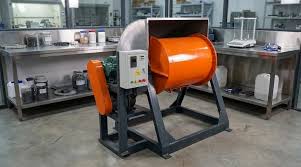
In mineral processing and cement production, grinding efficiency is one of the most critical factors influencing both cost and output quality. A properly designed Ball Mill is not just about size or capacity—it is about precise engineering that ensures optimal energy use, consistent particle size, and long-term operational stability. When design and calculation are done correctly, the entire grinding process becomes more predictable and cost-effective.
Modern industries increasingly rely on advanced configurations like the Grate Ball Mill to achieve higher discharge efficiency and improved throughput. Engineering solutions from Cementl are widely recognized for their precision design approach, helping operators optimize performance from the very beginning of the planning stage.
Fundamentals of Ball Mill Design
The design of a Ball Mill begins with understanding the material characteristics, required output fineness, and production capacity. These factors determine the mill diameter, length, rotational speed, and grinding media size. Every parameter plays a direct role in grinding efficiency.
A well-designed Ball Mill ensures proper cascading and cataracting motion of the grinding media. This motion is essential for breaking down particles effectively without excessive wear or energy loss. Cementl emphasizes engineering precision in its Ball Mill systems, ensuring that design calculations align with real-world operational demands.
In addition, liner design, lifter configuration, and internal volume utilization are carefully considered to maximize energy transfer during grinding.
Grate Ball Mill: Enhancing Discharge and Efficiency
The Grate Ball Mill is a specialized configuration designed to improve material discharge rates. Unlike overflow models, the Grate Ball Mill uses a grate plate at the discharge end, allowing ground material to exit more efficiently once it reaches the desired fineness.
This design reduces over-grinding and improves overall throughput. In a Grate Ball Mill, the internal pressure is better controlled, which enhances grinding efficiency and stabilizes production output.
Cementl integrates advanced engineering principles into its Grate Ball Mill designs, ensuring optimized grate spacing, improved airflow, and reduced clogging risks. This makes the Grate Ball Mill a preferred choice for high-capacity industrial applications where efficiency is a priority.
Key Calculations for Grinding Efficiency
Accurate calculation is essential in Ball Mill design. Engineers consider factors such as critical speed, power consumption, grinding media load, and material residence time. These calculations determine how effectively a Ball Mill will perform under operational conditions.
Critical speed calculation ensures the mill rotates at an optimal rate where grinding media can effectively cascade and impact the material. Power requirements must be carefully balanced to avoid excessive energy consumption while maintaining output quality.
In a Grate Ball Mill, discharge rate calculations are equally important. Faster discharge improves throughput but must be balanced to avoid incomplete grinding. Cementl applies advanced modeling techniques to fine-tune these calculations, ensuring maximum efficiency with minimal energy waste.
Optimizing Grinding Media and Internal Design
Grinding media selection is another critical aspect of Ball Mill performance. The size, density, and material of the grinding balls directly influence particle reduction efficiency. Proper distribution of media ensures consistent impact force throughout the mill.
Internal design elements such as liner shape and lifter height also play a significant role. In a Grate Ball Mill, these components must be carefully engineered to support efficient material flow toward the discharge end.
Cementl focuses on optimizing internal configurations to reduce dead zones and improve energy transfer, resulting in a more efficient grinding process overall.
Energy Efficiency and Operational Balance
Energy consumption is one of the largest operational costs in milling systems. A properly designed Ball Mill minimizes unnecessary energy loss by ensuring efficient motion of grinding media and consistent material flow.
The Grate Ball Mill contributes to energy savings by reducing over-grinding and improving discharge efficiency. This ensures that only properly processed material remains in the grinding chamber for the required duration.
Cementl integrates energy-efficient design principles into both Ball Mill and Grate Ball Mill systems, helping industries achieve lower operating costs without sacrificing performance.
Practical Considerations in Industrial Applications
In real-world applications, Ball Mill design must account for variations in feed material, moisture content, and operational conditions. Flexibility in design ensures stable performance even when raw material characteristics fluctuate.
The Grate Ball Mill is particularly useful in industries where high throughput and consistent product size are essential. Its design allows for better control over grinding time, improving overall process stability.
Cementl’s engineering approach ensures that each Ball Mill system is tailored to specific industrial requirements, offering a balance between efficiency, durability, and adaptability.
Engineering Precision Drives Grinding Success
Effective Ball Mill design and calculation are fundamental to achieving high grinding efficiency in industrial operations. From selecting the right dimensions to optimizing internal mechanics, every detail plays a crucial role in performance.
The Grate Ball Mill stands out as an efficient solution for improving discharge and boosting productivity, especially in high-demand environments. With advanced engineering support from Cementl, industries can achieve more reliable, energy-efficient, and cost-effective grinding systems.
Ultimately, investing in properly designed milling equipment is not just a technical decision—it is a strategic move toward long-term operational excellence and sustained industrial success.