
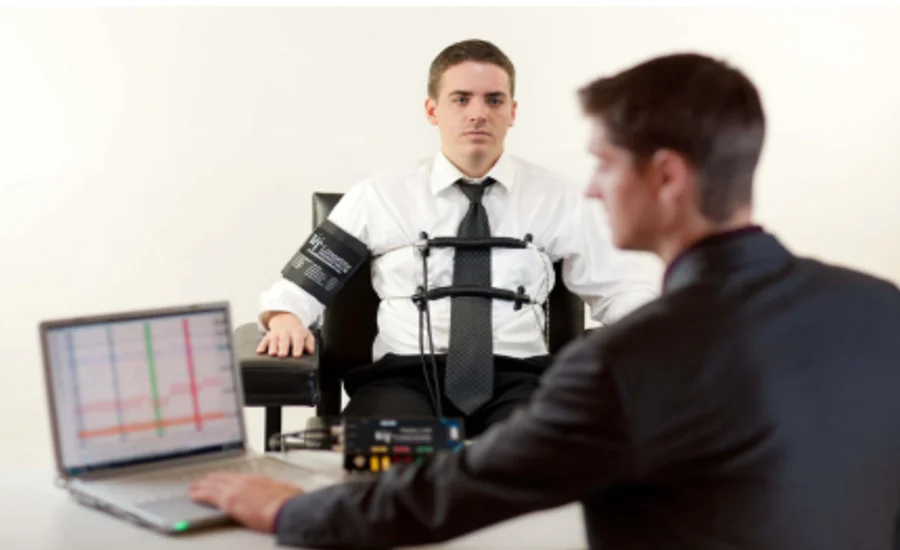

If you’ve ever seen a crime show or a true-crime documentary, you’ve probably watched someone sweat through a polygraph test. The dramatic music swells, the subject fidgets, and the examiner’s pen hovers over the chart like some oracle of truth. But let’s be honest: real life isn’t quite that cinematic. Polygraph tests are far more nuanced, often misunderstood, and—surprisingly—still controversial.
I remember the first time I sat in on a polygraph demonstration. The room was quiet, almost clinical, and there I was, staring at a machine that looked like a cross between a dentist’s chair and a cockpit. The examiner explained the basics while clipping sensors to my fingers and chest. I wasn’t lying to anyone, but I couldn’t shake the feeling that the machine was somehow “reading my soul.” That experience made me curious: how much does a polygraph really tell us about truth and deception?
How a Polygraph Test Actually Works
Here’s the thing: a polygraph doesn’t read your mind. It measures physiological responses—heart rate, blood pressure, respiration, and skin conductivity—while you answer a series of questions. The idea is that when you lie, your body betrays subtle signs of stress. In theory, your pulse might spike or your palms might sweat a little more than usual when you’re not telling the truth.
Most people assume that lying automatically triggers a panic response detectable by these sensors. But human bodies are complicated. Some folks barely flinch when they fib, while others break into a sweat just from being nervous. That’s why polygraph results are never 100% conclusive—they’re a snapshot of how your body responds under pressure, not an infallible “truth detector.”
Think about it like this: you’re at a family dinner and your aunt asks if you’ve been keeping up with your emails. You lie and say “yes,” but your heart races because you know you’ve ignored half a dozen work messages. Now imagine trying to interpret that spike. Are you lying about your emails, or just anxious about disappointing your aunt? That ambiguity is exactly what polygraph examiners wrestle with.
The Test Process: What to Expect
Walking into a polygraph session can feel like stepping into an interrogation room, even if the setting is friendly. Most sessions start with a pre-test interview. The examiner explains the procedure, goes over the questions, and often asks you to recount your personal history. This isn’t just small talk—it’s a way to baseline your physiological responses. Basically, they want to know how your body behaves when you’re telling the truth so they can spot deviations later.
Then comes the actual test. Electrodes are attached to your fingers, a belt-like sensor goes around your chest, and sometimes a cuff measures blood pressure. You’ll be asked control questions, relevant questions, and sometimes irrelevant questions just to compare responses. It sounds simple, but it can feel intense. Even if you’re innocent, the anticipation itself can trigger stress responses that mimic lying.
I once talked to someone who took a polygraph for a job in law enforcement. He told me he sweated through the first half of the test—not because he had anything to hide, but because the examiner’s calm, measured tone made him hyper-aware of every heartbeat. By the time the real questions came, his nervous system was already on high alert. That’s a real example of why interpreting polygraph results isn’t straightforward.
Why Polygraphs Are Controversial
Despite what TV dramas suggest, polygraph tests are not bulletproof. Courts in many countries are skeptical of their results, and some don’t allow them as evidence at all. The problem isn’t the technology—it’s the variability of human responses. Some people are naturally anxious, some are calm under pressure, and some can even “train” themselves to suppress physical reactions.
Here’s another layer: certain medical conditions or medications can affect readings. Someone with heart problems might have elevated stress signals that aren’t related to deception. And then there are professional “countermeasures,” like controlled breathing or mental tricks, which some people use to try and manipulate the results. Yes, it’s not easy, but it’s possible.
The controversy also spills into workplace settings. Companies sometimes use polygraphs for pre-employment screening, especially in security-sensitive fields. Critics argue that this can unfairly disadvantage nervous but honest candidates. It’s a tool, not a lie detector in the absolute sense.
Reading Between the Lines: Interpreting Results
If a polygraph test flags something, what does that actually mean? Most examiners will say it indicates a “significant physiological response” to a question. Not a lie. Not a confession. Just a response that deviates from the baseline. That’s an important distinction because it underscores how much nuance there is in interpreting results.
I’ve read stories of people who failed polygraphs but were later proven completely innocent. Sometimes it’s anxiety, sometimes it’s an examiner misreading a response, and sometimes it’s simply the unpredictability of human physiology. In other words, a polygraph is a tool for guidance, not a verdict.
When Polygraphs Can Be Useful
Despite their flaws, polygraphs aren’t useless. Law enforcement often uses them as investigative tools rather than proof. They can help narrow down leads, guide interviews, or even jog someone’s memory. The act of being tested can prompt confessions or clarifications simply because it puts a person in a reflective, high-stakes environment.
Think of a polygraph like a mirror in a tense conversation. It doesn’t tell you the truth on its own, but it can reveal patterns and reactions that might otherwise go unnoticed. For investigators, it’s another layer of insight—not a magic wand.
The Psychology Behind the Test
Let’s get into the human side. Polygraphs don’t just measure physiology—they interact with psychology. The fear of being caught, the desire to appear honest, the stress of scrutiny—all of these amplify physical responses. Some psychologists argue that a lot of what we see in polygraph readings is more about anxiety and social pressure than actual lying.
Imagine a teenager who sneaks out of the house and is confronted with a “truth test.” Even if they admit nothing, their body might betray them simply because of guilt or fear. That’s why understanding context is crucial when interpreting any results.
Real-World Scenarios
Here’s a scenario I’ve heard from an examiner: a man was suspected of embezzlement at work. The polygraph showed spikes during key questions. He confessed—but not to the crime investigators were focused on. It turned out he was guilty of a completely different offense. The polygraph didn’t lie; it just highlighted physiological stress. The human story behind the numbers was what mattered.
Another time, a woman was tested for a security clearance. Her readings suggested deception on a question about prior drug use. In reality, she had been stressed thinking about a distant, minor mistake from years ago. The examiners had to dig deeper, ask context-driven questions, and eventually cleared her. Again, the polygraph provided clues—but human judgment made the difference.
Why People Fear Polygraphs
Part of the fascination—and fear—comes from how personal the test feels. You’re essentially saying, “Here, measure me under pressure and tell me if I’m lying.” That’s intense. Even innocent people can sweat, stammer, or fidget. The anticipation can be enough to make your body betray you.
There’s also the stigma. Failing a polygraph, even for innocent reasons, can feel like public humiliation in some contexts. That’s one reason why transparency and understanding are so important. Knowing what the test actually does—and what it doesn’t do—can make a world of difference.
Bottom Line: A Tool, Not a Truth Machine
At the end of the day, polygraph tests are what they always have been: tools. They can provide insights, prompt confessions, and sometimes guide investigations, but they don’t provide absolute truth. Human bodies are complicated. Stress is subjective. Context matters.
If you’re facing a polygraph, the best approach is honesty and calm preparation. Freaking out or trying to “trick the machine” is usually more harmful than helpful. And if you’re on the other side, interpreting results requires patience, context, and experience.
Here’s the takeaway: the polygraph fascinates because it touches on a universal question—can we truly detect deception? The answer is yes, but not perfectly. It’s a dance between biology, psychology, and human behavior. Treat it as a guide, not a verdict, and you’ll navigate it far more effectively.
So next time you see someone hooked up to those wires on TV, remember: what’s happening behind the scenes is less about drama and more about measuring responses, interpreting subtle signals, and understanding the messy, unpredictable ways humans react under pressure. And maybe, just maybe, it’s a reminder that truth isn’t always as simple as a spike on a chart.